Guttrz / Blog / How often to clean gutters
How often should you clean gutters in Ohio?
A Northeast Ohio gutter cleaning schedule based on when local trees actually drop seeds, leaves, and needles.
Most Northeast Ohio homes should clean gutters twice a year: late May or June after maple seeds drop, and late November or early December after the leaves are down. Homes with no nearby trees can usually clean once a year, while homes under pines or overhanging branches may need three to four cleanings. Guttrz prices a cleaning by stories, linear feet, how packed the gutters are, and whether guards are on, with a firm price from your address and a photo.
How often should you clean gutters? In Northeast Ohio, most homes need it twice a year: once in late spring after the maple seeds fall, and once in late fall after the last leaves drop. Homes under pines or heavy tree cover may need three or four cleanings. This page gives you a local calendar, a frequency table by tree cover, the signs you can check from the ground, and when guards cost less than cleaning.
How often should you clean gutters in Northeast Ohio?
Plan on two cleanings a year if you have trees near the house: late May or June, and late November or early December. With no trees near the roof, once a year in late fall is usually enough. With pines or branches hanging over the roof, plan on three to four. Timing matters more than the count. A cleaning done too early just gets filled again.
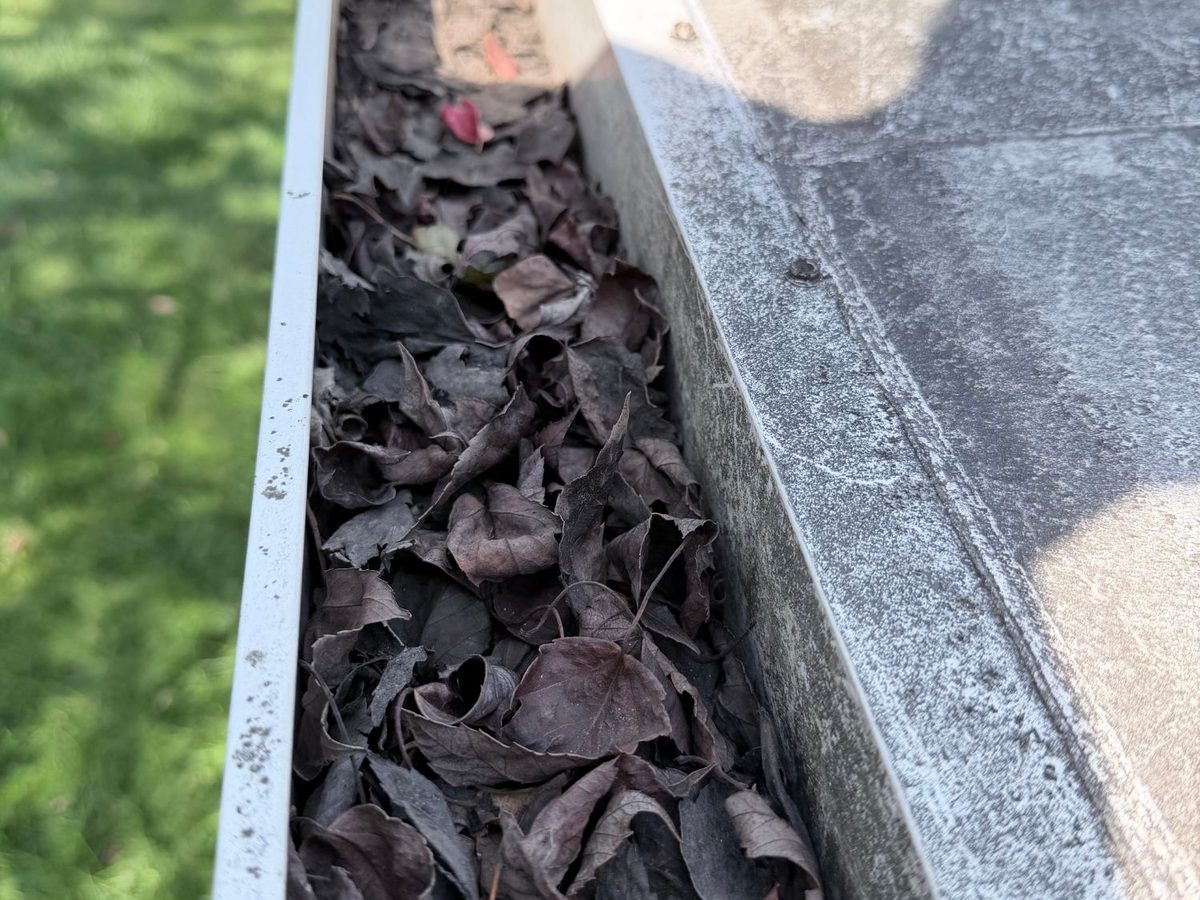
National advice usually says "spring and fall." That is close, but in Stark and Summit County the calendar is a little different. Early April is often too soon, because maples have not dropped their seeds yet. Mid-October is usually too soon too, because peak leaf color in Northeast Ohio tends to arrive in mid to late October, and a lot of leaves are still on the trees after that.
Gutter cleaning frequency by tree cover
Stand in your yard and look at what is above and around your roof. Then find your row.
| Your yard | Cleanings per year | When |
|---|---|---|
| No trees taller than the roof nearby | 1 | Late November or early December |
| A few maples, oaks, or other shade trees in the yard | 2 | Late May to June, then late November to early December |
| Branches hanging over the roof | 2 to 3 | Add a mid-fall pass in early November |
| White pines, spruce, or other conifers near the roof | 3 to 4 | Spring, late fall, plus checks after the fall needle drop and in late winter |
| Wooded lot or backs up to woods | 3 to 4 | Spring, early November, early December, and after big storms |
| Stainless micro-mesh guards installed | Check once a year | Late fall, brush off anything sitting on top |
Roof shape matters too. Valleys where two roof slopes meet dump extra debris into one spot, so gutters below a valley often clog first even when the rest of the run is clear.
When to clean gutters in Ohio: a month-by-month calendar
The best time to clean gutters is right after each big debris drop ends, not before it starts. In Northeast Ohio, that means after the spring seed drop and after the late fall leaf drop, with extra checks for pine needles and storms.
Late May to June: after the maple helicopters
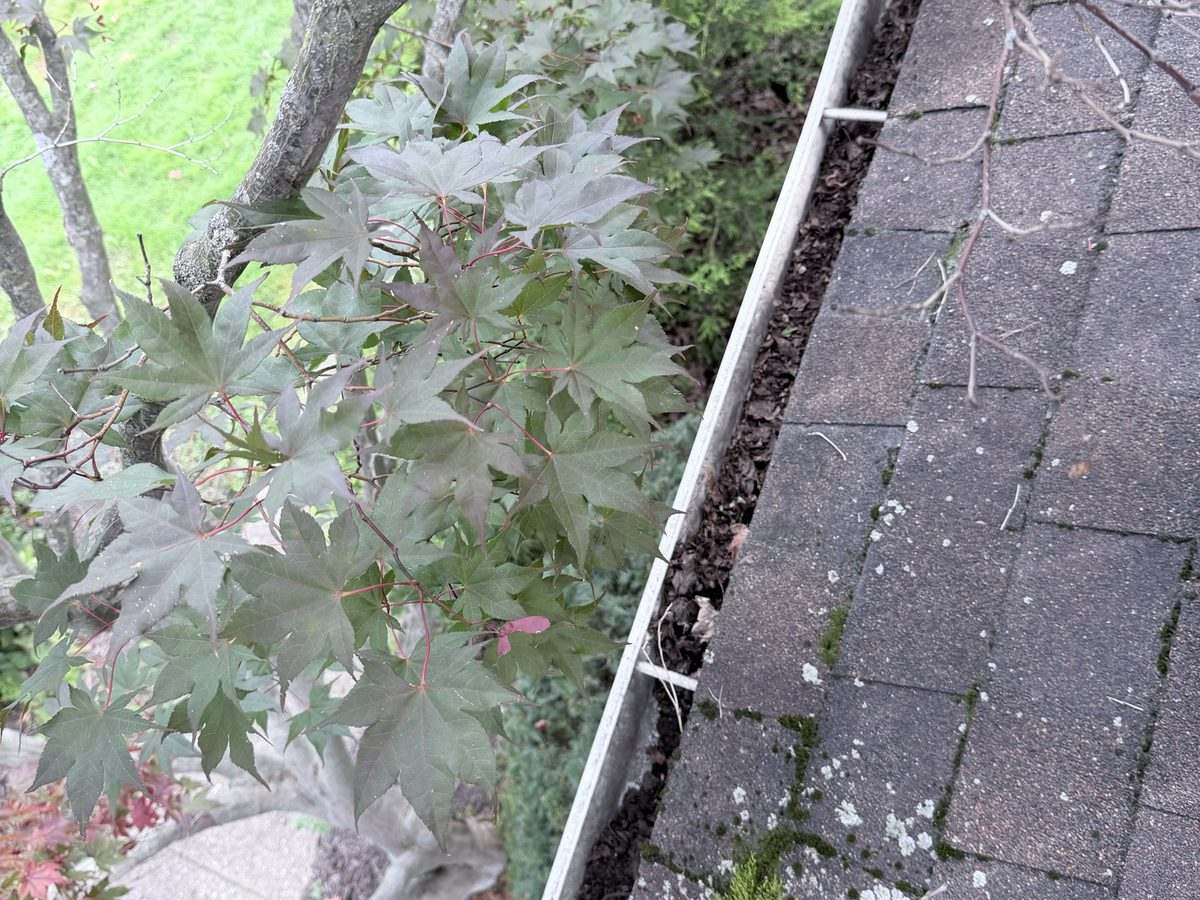
Red maples and silver maples produce their winged seeds, often called helicopters, in spring. Ohio State University Extension notes that silver maple seeds fall in mid to late spring, and red maples drop in late spring or early summer. In a heavy seed year the gutters can pack full. Wet seeds sprout in the gutter and form a mat that water cannot get through. Wait until the bulk of the seeds are down, then clean.
Summer: after heavy storms
Summer thunderstorms knock down twigs, leaves, and seed pods. You do not need a full cleaning after every storm. Just walk the house during the next hard rain and look for water spilling over the edge. If you see it, our guide to why gutters overflow helps you find the cause.
October: early leaves and pine needles
Some trees, like black walnut, drop their leaves early. White pines also shed their older inner needles in the fall, and Ohio State Extension describes this as normal. If you have pines near the roof, check your gutters in late October. Needles lie flat, knit together, and slow water even when the gutter looks only half full.
Late November to early December: the most important cleaning
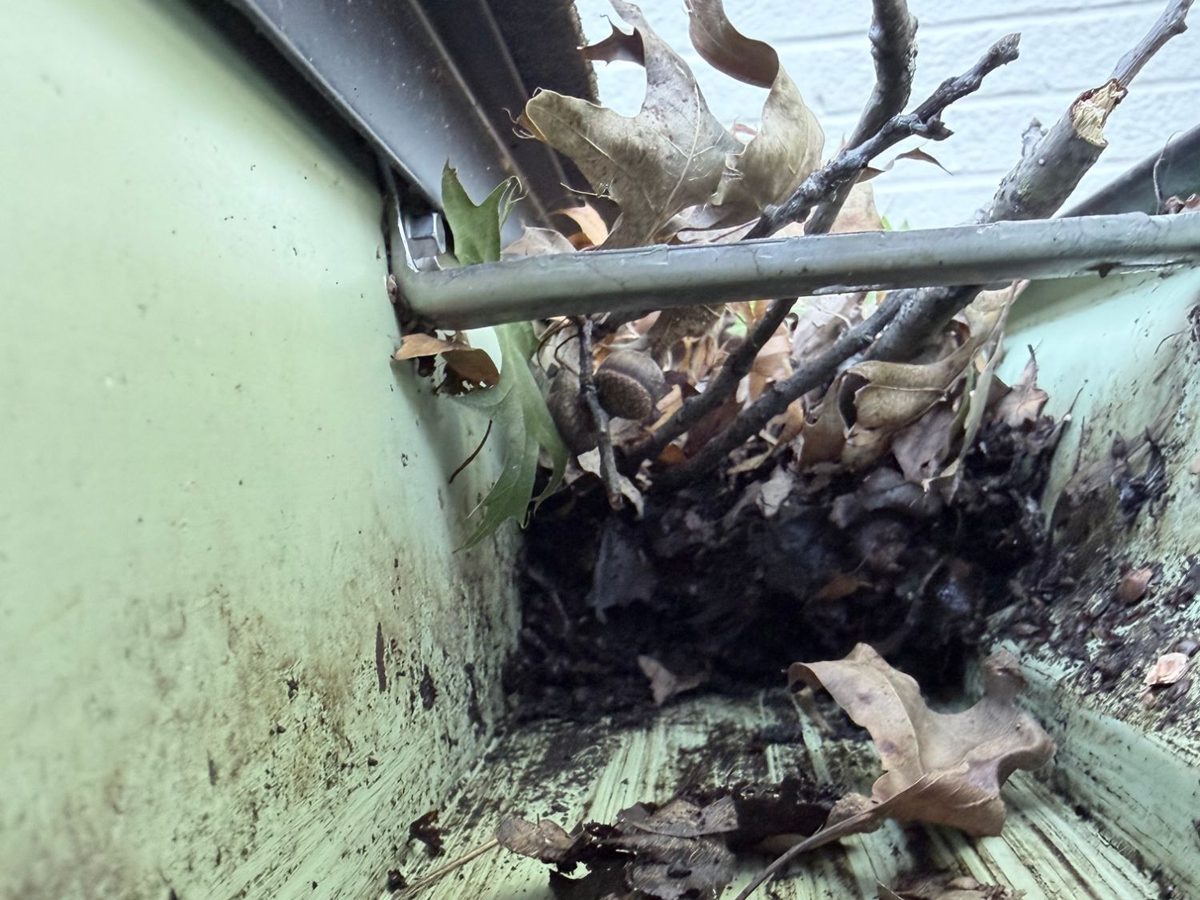
This is the cleaning that matters most in Ohio. Maples usually finish first. Oaks drop later, and pin oaks and beeches can hold some dead leaves well into winter. Clean after most leaves are down but before gutters freeze solid. Leaves left in a gutter hold water, and in freeze and thaw weather that water can turn to ice, add weight to the hangers, and back up under the roof edge. Our post on gutter guards and ice dams in Ohio explains how that happens.
Late winter: a quick look
After the snow melts, look for gutters that sag, pull away, or drip at the seams. Winter is also when you see the damage clogged gutters caused in the fall.
What are the signs your gutters need cleaning?
You can spot most clogs from the ground. Look for water spilling over the front edge in rain, plants growing out of the gutter, a downspout that stays dry during a storm, sagging sections, or streaks down the siding. Any one of these means it is time to clean, whatever the calendar says.
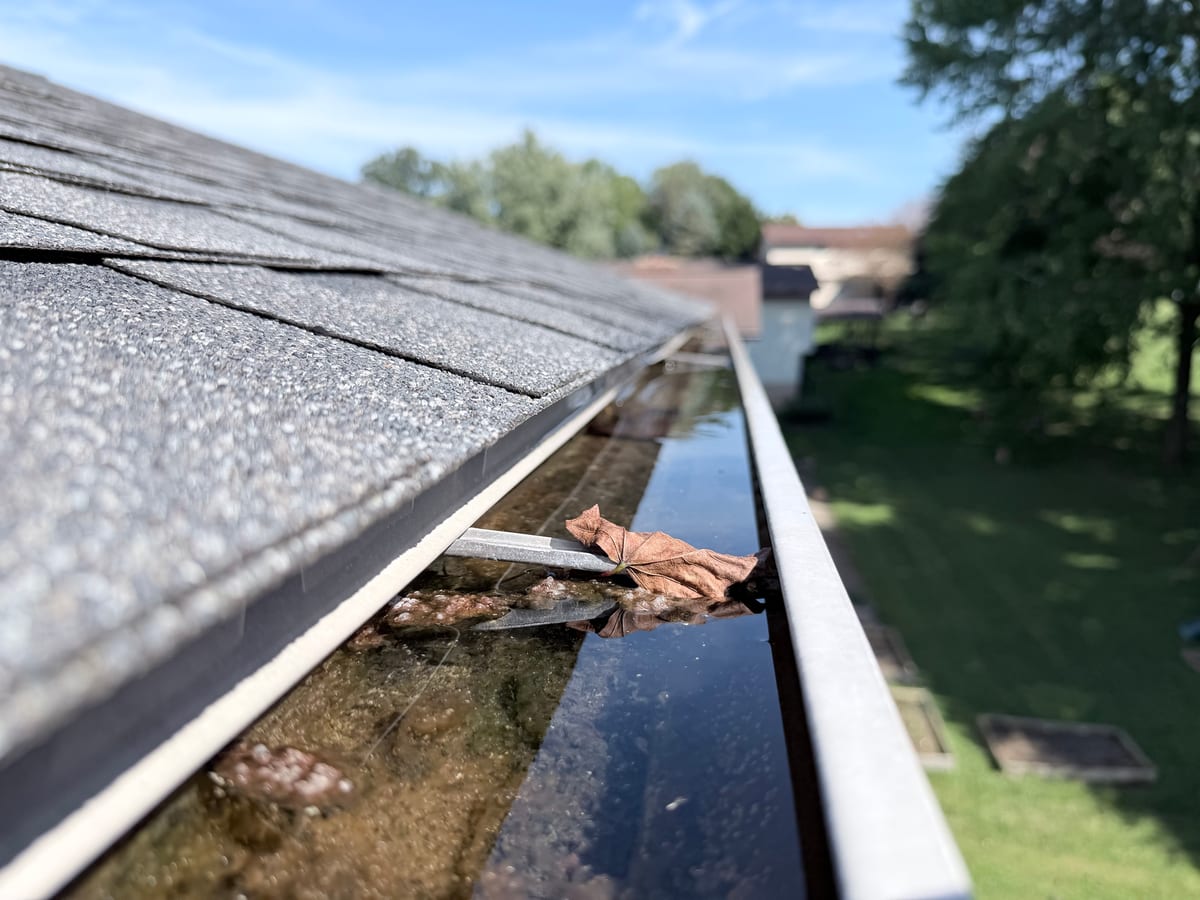
- Water sheets over the edge in rain. Watch the corners and the spot below any roof valley first.
- Nothing comes out of a downspout. If the gutter is full and the downspout is dry, the clog is in the elbow at the top or the downspout itself.
- Seedlings or grass growing in the gutter. That means soil has built up from rotting leaves and shingle grit.
- Gutters sag or pull away from the fascia. Wet debris is heavy. See why gutters pull away from the house.
- Stripes or stains on siding below the gutter. These come from water spilling over again and again.
- Washed-out mulch or a trench in the soil below the eaves. Overflow lands in the same spot each storm.
- Damp basement walls after rain. Water dumping next to the foundation instead of out the downspout can find its way in.
- Birds, wasps, or mosquitoes around the gutter. Standing water and debris draw them in.
A simple test on a dry day: run a garden hose at the high end of a gutter run and watch. The water should move steadily to the downspout and come out the bottom. If it pools, spills, or backs up, you found your clog.
Is DIY gutter cleaning safe?
It can be, on a one-story home with a sturdy ladder and a helper. The real risk is the ladder, not the gutter. A national study using Consumer Product Safety Commission injury data found U.S. emergency rooms treated about 136,000 ladder injuries a year from 1990 to 2005, and where the location was recorded, about 97 percent happened outside of work, such as at homes and farms.
That figure comes from a study published in the American Journal of Preventive Medicine. Fractures were the most common injury. If you clean your own gutters, follow ladder basics like these, several of which come from CPSC ladder safety guidance:
- Use the right ladder. An extension ladder should reach at least 3 feet above the roof edge.
- Set it on firm, level ground. Soft lawn after rain is not firm. Use a board or a leveler.
- Angle it right. About 75 degrees. A simple rule: for every 4 feet up, the base sits 1 foot out from the wall.
- Stay off the top three rungs of an extension ladder.
- Keep your belly button between the rails. Move the ladder instead of reaching.
- Have someone hold the base.
- Stay away from power lines. Never use a metal ladder near the service line to your house.
- Do not lean the ladder on the gutter itself. Use a standoff so the ladder rests on the roof, not the gutter lip.
A few Ohio-specific cautions: do not clean on frosty November mornings when rungs and shingles are slick, and do not walk a roof to reach gutters. Wear gloves, since old gutters have sharp screws and metal edges. Scoop debris into a bucket, then flush the downspouts with a hose. If you are uneasy on a ladder, have a two-story or steep roof, or are not sure you can do it safely, hire it out.
What does a professional gutter cleaning include?
A good pro cleaning removes debris by hand from every gutter, bags or hauls it away, flushes each downspout, and checks for problems while someone is up there. It should cover the whole house, including porch and garage gutters, not just the runs you can see from the street.
Before you book any company, ask whether these are included:
- Hand cleaning of all gutters, including second-story and garage runs
- Debris bagged and removed, not blown onto your beds
- Every downspout flushed and tested with water
- Loose hangers, leaking seams, and bad pitch pointed out
- A quick look at the roof edge and drip edge for damage
- Photos, so you can see what was done
How much does gutter cleaning cost in Ohio?
Guttrz prices a gutter cleaning by the number of stories, the linear feet of gutter, how packed the gutters are, and whether guards are on. A one-story ranch with light debris is the quickest and cheapest job there is. A two-story home with full gutters and clogged downspouts takes longer and costs more. You get a firm price from your address and a photo of the gutters, usually within the hour during business hours. For a sense of the market, gutter cleaning in Northeast Ohio commonly runs about $100 to $250 for a single-story and $150 to $350 for a two-story, a market range, not a Guttrz price.
Here is how cleaning adds up over time. Two cleanings a year doubles whatever one visit costs you. With pines and four cleanings, it doubles again. Over ten years, two cleanings a year at the market range above adds up to thousands of dollars, not counting price increases.
Now compare guards. Guttrz prices them per linear foot, one rate for a single story and a higher rate for two-story or steep roofs, so a 150-foot one-story home with 4 corners is quoted on the 150 feet, one time, corners included. That install includes a full gutter cleaning, downspout flush, and corner reseal at no extra charge. Small fixes during the install, like a missing downspout section, a loose hanger, or a leaking seam, are included at no charge. See how the rates work on our gutter guard cost page.
Do you still need to clean gutters with gutter guards?
Yes, but far less. Stainless micro-mesh keeps leaves, seeds, and needles out of the gutter. Most dry debris blows off the top. Some can sit on the mesh, especially on low-pitch roofs or under pines. Plan a yearly check and brush off the top with a soft brush. Fine shingle grit can also settle inside over the years, so an occasional flush helps.
Not all guards are equal here. Cheap plastic screens and foam inserts can clog, sag, or trap debris. Pine needles and maple seeds are the toughest test, which is why we wrote a separate guide to the best gutter guards for pine needles and maple seeds.
When do gutter guards make more sense than cleaning?
Guards make sense when you need two or more cleanings a year, have a two-story home you should not climb, or have pines or overhanging trees. Over five to ten years they often cost less than repeat cleanings. They make less sense if you have no trees nearby and clean once a year yourself.
Honest cases where you may not need guards:
- No trees taller than your roof anywhere near the house.
- A one-story home you can safely clean yourself in an hour.
- Gutters that are failing or badly pitched. Fix or replace those first.
For the full cost and payback math, read are gutter guards worth it.
If you want a cleaning, or a price on guards so you can stop cleaning, use the form on this page or text (330) 818-5584 with your address. You will get a price range by text within an hour.
Common questions
Is it okay to clean gutters in the winter?
You can clear gutters on a mild, dry winter day, but not when they are frozen or the ladder and roof are icy. Frozen debris will not come out and can damage the gutter if you pry at it. It is better to do the main cleaning in late November or early December before hard freezes.
What happens if you never clean your gutters?
Water spills over the edge and lands next to your foundation, which can lead to wet basements and washed-out soil. Wet debris adds weight that pulls gutters loose, and standing water can rot fascia boards. In Ohio winters, clogged gutters also make ice buildup at the roof edge more likely.
How long does a gutter cleaning take?
For most homes a professional cleaning takes about one to three hours, depending on footage, height, and how packed the gutters are. Doing it yourself usually takes longer because you move the ladder more often. Downspout clogs add time.
Can you clean gutters from the ground?
You can reach one-story gutters from the ground with a telescoping gutter wand or a hose attachment. These work for loose leaves but struggle with packed, wet debris and maple seed mats. They also make it hard to see whether the gutter is actually clear.
Is spring or fall gutter cleaning more important?
In Northeast Ohio, the late fall cleaning is the more important one. It clears the heavy leaf load before freezing weather, snow, and ice. The spring cleaning mostly deals with maple seeds and debris that blew in over winter.
Should you clean gutters before or after a new roof?
After. A roof tear-off drops old shingle pieces, nails, and a lot of grit into the gutters. A good roofing crew should clean up, but check the gutters and downspouts yourself once the job is done.
Do downspouts need to be cleaned separately?
Yes. A clean gutter does not help if the downspout is packed. Run a hose into the top of each downspout and make sure water flows freely out the bottom. The elbows at the top and bottom are where most clogs form.
Keep reading
Written by Christian Schaffner, owner of Guttrz. Updated October 8, 2026.
Where we install
Get your quote
Six quick steps. We send you a price range within the hour.