Guttrz / Blog / Signs you need gutter cleaning
Signs you need gutter cleaning now
What a clogged gutter looks like from the driveway and from the ladder, with photos, plus a rain check you can do without climbing anything.
The signs you need gutter cleaning are water sheeting over the front lip in rain, a downspout that trickles or runs dry in a storm, plants growing out of the gutter, streaks on the fascia, and a run that sags. From a ladder, standing water and green algae mean the gutter has stopped draining. A cleaning from Guttrz costs $150 to $300 and includes every downspout flushed and before-and-after photos the same day.
What are the signs you need gutter cleaning?
The clearest signs you need gutter cleaning are water pouring over the front lip in rain, a downspout that trickles or runs dry during a storm, plants growing out of the gutter, and a run that sags in the middle. From a ladder, the giveaways are standing water, green slime, and a layer of grit sludge over the outlet. Any one of these means the gutter has stopped draining.
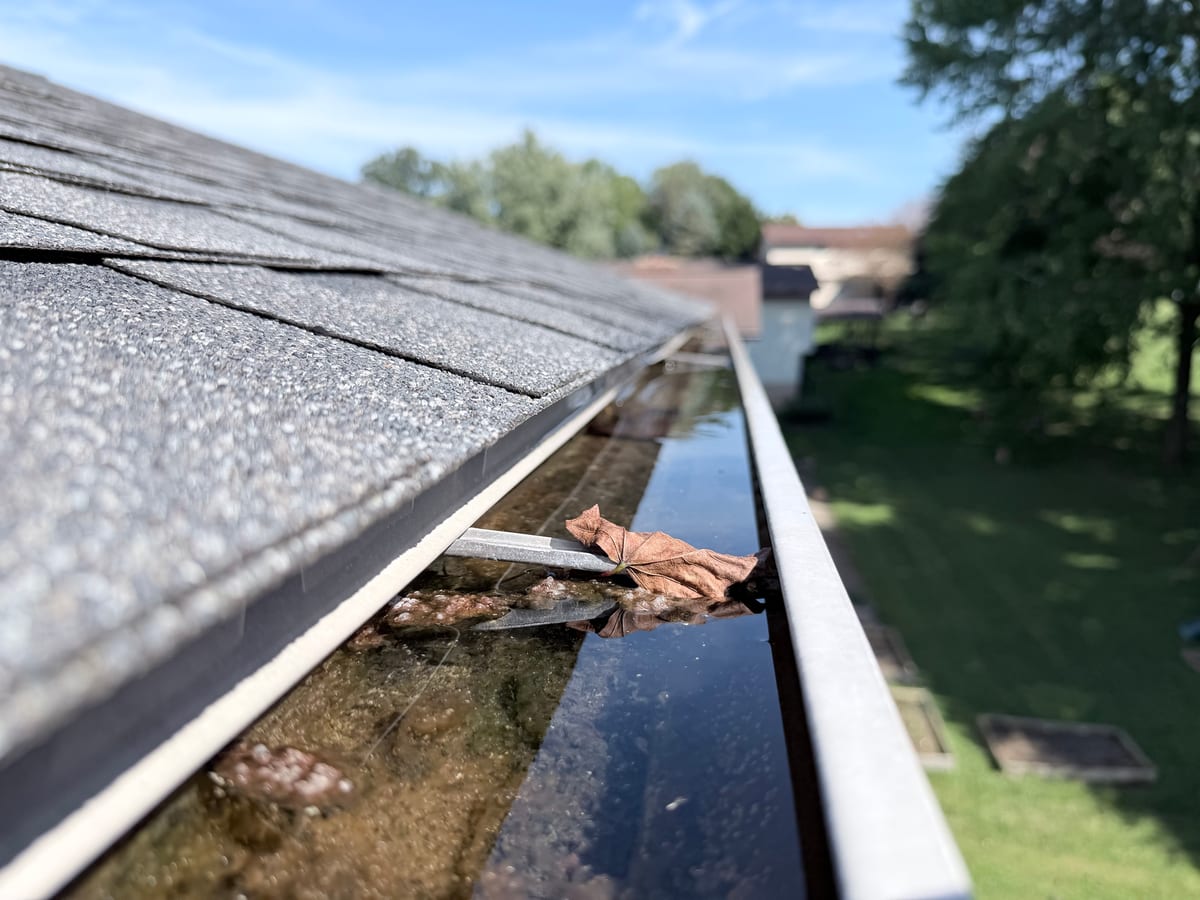
Most of these you can check from the driveway in the next rain. This page covers the ground-level signs, the ladder-level signs, a 10-minute rain check, and which signs need a $150 to $300 cleaning, a repair, or guards. The two photos came from a ladder check in North Canton, on a gutter that looked fine from the ground.
How to tell if gutters are clogged from the ground
You can tell if gutters are clogged without a ladder by watching the house in a steady rain, then walking the gutter line once it stops. Water over the front edge, splash marks in the mulch, stained fascia, and a dry downspout all point to a clog. Here is each sign and what it usually means.
Water sheets over the front lip in rain
A clean gutter catches the roof runoff and sends it to the downspout. A clogged one fills up and spills. Watch the corners first, then the spot below any roof valley, then the middle of long runs. A steady sheet of water over the front in an ordinary rain means the gutter is full or the outlet is blocked. If it only happens in the hardest storms, the gutter may be clean but too small for the roof, which our post on why gutters overflow sorts out.
Drip lines and splash marks in the mulch
After the rain, look down. Overflow lands in the same spot every storm and digs a shallow trench in mulch or bare soil right under the gutter line. Mulch thrown up onto the siding, a clean stripe in dusty soil, or a row of flattened plants under the eave all mark where water has been spilling.
Stained, streaked, or peeling fascia
The fascia is the board the gutter hangs on. When a gutter overflows at the back, water runs down that board. Look for dark vertical streaks on the gutter face, peeling paint on the fascia, or a soft spot when you press it with a screwdriver. Streaks on the outside of the gutter mean it has been overflowing for a while, not just once.
A run that sags or pulls away
Sight down each run from the end of the house. A gutter should look straight with a slight fall toward the downspout. A belly in the middle, or a gap opening between the gutter and the fascia, usually means it is holding wet debris and water. Water weighs a little over 8 pounds a gallon, and a 40-foot run of 5-inch gutter holds roughly 30 gallons when full, so a packed gutter can put over 200 pounds on the hangers and back the screws out of the fascia. Our post on gutters pulling away from the house covers the fix.
Plants growing out of the gutter
Seedlings, grass, or a small maple standing up out of a gutter mean there is soil in there. Rotting leaves and shingle grit turn into a compost layer, and maple seeds sprout in it by June. Nothing grows in a gutter that drains.
Birds, wasps, and mosquitoes at the gutter line
Birds carry nesting material into a gutter that already holds debris, and they favor the corners. Paper wasps build under the gutter lip. Mosquitoes breed in standing water, and a clogged gutter holds it for days after a rain. A lot of activity around one section of gutter in summer means that section is probably holding water.
A downspout that trickles or runs dry in a storm
This is the single best ground-level test. In a steady rain, every downspout should be running hard at the bottom. If the gutter above is full or spilling and the downspout puts out a trickle or nothing, the clog is in the outlet, the top elbow, or the downspout itself.
Ice curtains and icicles in winter
On a sunny January afternoon, snow melts on the roof and runs to the gutter. If the gutter is packed with fall leaves, that water has nowhere to go, so it freezes into an ice curtain along the front edge. A clean gutter still ices some in a Northeast Ohio winter. A gutter that grows a thick ice curtain on every thaw was almost always clogged going into winter, which means it missed the late fall cleaning, the one that matters most in the Ohio gutter cleaning calendar.
A wet basement corner after rain
Overflow lands right next to the foundation and pushes water against the basement wall. If one corner of the basement is damp or smells musty a day after a hard rain, look at the gutter above that corner. Often it is spilling, or the downspout there is plugged. Our post on clogged gutters and wet basements explains how to confirm the link.
What does a clogged gutter look like from the ladder?
From the ladder, a gutter that needs cleaning shows standing water, a green or black film, gritty sludge, a mat of maple seeds, or an outlet covered by debris. Any of these means the gutter has stopped draining, even when it looks empty from the ground.
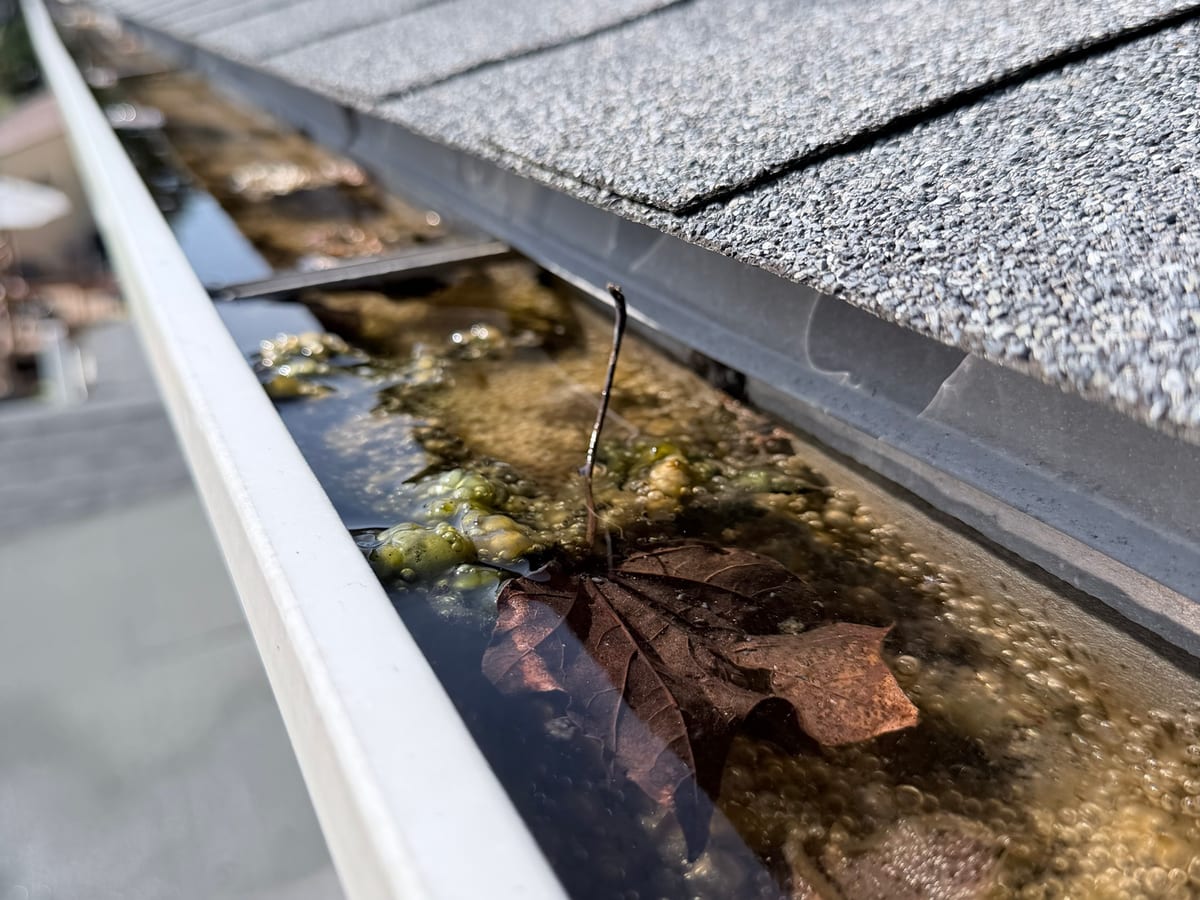
Standing water in the gutter
Standing water in gutters a day after the rain stops is the number one thing to look for. Water that sits means the outlet is blocked or the run has lost its pitch. Notice in the photo how little debris is in the water. A gutter does not need to be full of leaves to be clogged. One soggy leaf over the outlet, or a few inches of packed grit in the downspout elbow, is enough.
Algae and slime
A green film on the bottom of the gutter or slick black slime along the seam means water has been sitting for weeks. Algae needs still water and light. A draining gutter dries out between rains and never grows it.
Grit sludge
Asphalt shingles shed granules every year, and more as the roof ages. The granules wash into the gutter and settle into a dark, heavy sludge that looks like wet coffee grounds. A thin layer is normal between cleanings. An inch or more means years without a cleaning, and that sludge is what packs downspout elbows solid.
A mat of maple seeds
Red and silver maples drop their winged seeds in late spring. In a gutter the seeds soak up water, tangle together, and form a mat that water cannot pass through. If you see a tan or brown mat in the gutter in June, it is due now, not in the fall.
A plugged outlet
The outlet is the hole where the gutter feeds the downspout. If the gutter is mostly clear but a cap of leaves, a bird nest, or a tennis ball sits over the outlet, the whole run backs up. A plugged outlet is the most common thing behind a gutter that looks clean from the ground and still overflows. Pull the debris off, run a hose in, and check that water comes out the bottom of the downspout at full flow.
How do you do a 10-minute rain check on your gutters?
You can check every gutter on your house from the ground in one steady rain. Walk the house once while it is raining, then again after it stops.
- Stand back and watch each side for a minute. Look for water sheeting over the front edge, at the corners and below any roof valley first.
- Check every downspout at the bottom. Each one should be running hard. Note any that trickle or run dry.
- Look at the seams. Water dripping at a corner or an end cap is a leak, not a clog.
- Look behind the gutter. Water running down the fascia means it is going over the back edge, which points to a run that is overflowing or hung too low.
- After the rain, check the ground. Trenches in mulch, splash marks on the wall, and puddles at the foundation show where overflow has been landing.
- Check the basement. Walk the corners and sniff. A damp corner under a spilling gutter is the last link in the chain.
On a dry day, you can run the same check with a garden hose laid at the far end of each run, though that needs a ladder. Either way, write down which sides and which downspouts failed. That list tells you whether you need a cleaning or something else.
Which signs mean cleaning, repair, or gutter guards?
Most of the signs above mean a cleaning, which costs $150 to $300 from Guttrz. Standing water in a gutter that is already clean, a sagging run, or a leaking corner means a repair. Clogs that come back every few months on a house under trees are the case for guards. The table sorts them.
| What you see | Most likely fix | What it costs with Guttrz |
|---|---|---|
| Water over the front lip in ordinary rain, debris visible | Cleaning | $150 to $300 |
| Downspout trickles or runs dry | Cleaning, with every downspout flushed | Included in the cleaning |
| Plants growing in the gutter | Cleaning | $150 to $300 |
| Standing water in a gutter that is already clean | Reslope | Priced on site |
| Run sags or pulls away from the fascia | Rehang with new hangers, after a cleaning | Priced on site |
| Drips at a corner or end cap | Reseal the seam | Priced on site |
| Water runs behind the gutter, fascia stained | Rehang, or flashing at the roof edge | Priced on site |
| Clogs come back two or three times a year under trees | Stainless micro-mesh guards | $15 to $17 per foot, $1,200 minimum, cleaning included |
The order matters: clean first, then judge the slope. A gutter full of grit can look like a bad slope from the ladder, and once the sludge is out the water often drains fine. If the run still holds water after a cleaning, it needs to be resloped. Guttrz does reseal, reslope, and rehang work, priced on site after the ladder check, because the cost depends on how much of the run has to come down and whether the fascia behind it is solid. The gutter repair page explains each one.
Guards answer a different question. If you have cleaned the gutters and they fill up again by the next season, the problem is the trees, not the gutter. Stainless micro-mesh keeps leaves, seeds, and needles out for good. It costs $15 per foot on a single story and $17 per foot on a two story or steep roof, corners included, with a $1,200 job minimum, and the cleaning, downspout flush, and corner reseal come free with the install. The gutter guard cost page has the full rate table. Guards are a poor fit for a gutter that sags or leaks, so fix that first.
What does a Guttrz gutter cleaning include?
A Guttrz gutter cleaning costs $150 to $300 and covers every gutter on the house: a hand cleanout of every run, a flush of every downspout, debris hauled away, and before-and-after photos of every side texted to you the same day. The owner sets the price by text from your address and number of stories, so you know the number before anyone shows up.
- Hand cleanout. Leaves, seeds, grit sludge, and nests come out by hand and scoop, not blown into your beds.
- Every downspout flushed. A hose goes in the top of each one until water runs out the bottom fast and clear.
- Debris hauled away. It goes into bags and leaves with the truck.
- A look at seams, hangers, and slope. If a corner weeps or a run sits low, you hear about it with a photo, not a surprise charge.
- Before-and-after photos of every side, the same day. You see what was in there and how it looks now, without climbing a ladder.
Underground drain lines are not part of a cleaning. We flush each downspout to the ground and tell you if a buried pipe backs up. Full details are on the gutter cleaning page.
If you saw two or more of these signs in the last rain, the gutters are due. Use the form on this page or text your address and number of stories to (330) 818-5584 for a firm cleaning price by text. If you would rather stop cleaning for good, the same text gets a guard price range within an hour, and the how it works page shows what happens next.
Common questions
Can gutters be clogged without overflowing?
Yes. A gutter with a partly blocked outlet or a low spot can hold water for days and never spill in a light rain. The damage happens anyway, because standing water rusts steel gutters, rots the fascia behind aluminum ones, and freezes in winter. The only sure checks are watching the downspouts in a hard rain or looking from a ladder.
Why is there standing water in my gutters after I cleaned them?
If the gutter is clean and still holds water, the run has lost its slope or the downspout is blocked below the outlet. Sight down the gutter for a low spot, then run a hose into the top of the downspout and see if it comes out the bottom at full flow. A low spot means rehanging that section. A slow downspout means clearing the elbows or the buried drain it feeds.
Is it bad to leave standing water in gutters?
Yes. Standing water adds weight that pulls hangers loose, breeds mosquitoes, grows algae that traps the next round of debris, and in a Northeast Ohio winter turns to ice that can back up under the shingles. It is the earliest sign of a clog, and it is cheapest to fix at this stage.
How can I tell if my downspout is clogged?
Watch it during a steady rain. A clear downspout runs hard at the bottom. A clogged one trickles, runs dry, or sprays from a seam partway down while the gutter above it fills or spills. On a dry day, run a hose into the top and see whether water comes out the bottom within a few seconds.
What happens if I skip a gutter cleaning this year?
On a house under trees, skipping the late fall cleaning usually means a gutter full of wet leaves going into winter. That water freezes, adds weight, and can push meltwater under the roof edge. By spring the leaves have rotted into sludge, maple seeds sprout in it, and the downspouts are packed. The next cleaning takes longer and costs more, and the fascia may already show stains.
Can I check my gutters without a ladder?
Mostly, yes. Watching the house in a steady rain shows you overflow and dead downspouts, and a walk around afterward shows trenches in the mulch and stains on the fascia. What you cannot see from the ground is standing water, algae, and grit sludge, which is why Guttrz sends before-and-after photos of every side with each cleaning.
Do gutter guards mean I never need to check for these signs?
No, but the checks get quick. Stainless micro-mesh keeps leaves, seeds, and needles out of the gutter, so clogs inside stop. Pollen and fine grit can still film the top of the mesh. Once a year, watch the guards in a rain. If water runs across the top and off the edge instead of through, the mesh needs a rinse.
How long after rain should gutters be dry?
A gutter with the right slope and a clear outlet drains within minutes of the rain stopping and is dry to the touch within a few hours on a mild day. If you see water in the gutter the next morning, the run is holding water and needs a cleaning or a reslope.
Keep reading
Written by Christian Schaffner, owner of Guttrz. Updated September 17, 2026.
Where we install
Get your quote
Six quick steps. We send you a price range within the hour.