Guttrz / Blog / Gutter guard myths
Gutter guard myths: 13 claims checked, including the half-true ones
Some things you hear about gutter guards are wrong, and some are closer to right than installers admit. Here is a plain verdict on each.
The biggest gutter guard myths are that guards are self-cleaning, that they cause ice dams, and that all guards work the same. No guard is maintenance-free: stainless micro-mesh under trees still needs a light brush or rinse about once or twice a year. Several myths are half true, since cheap or badly angled guards can overflow in heavy rain and large hail can dent aluminum. Micro-mesh guards are a one-time cost priced per linear foot, set against cleaning bills that come back every year.
Most gutter guard myths come from sales pitches that promise too much or cheap guards that deliver too little. Below are 13 claims Northeast Ohio homeowners hear, each with a plain verdict. Several are half true. Guttrz installs stainless steel micro-mesh guards, so we have a stake in this, which is why each answer also says where guards fall short.
Gutter guard myths vs reality: the short version
Guards do not clean themselves, stop ice dams, or all work the same. They also do not have to damage your roof or look bad.
| Myth | Verdict | Reality in one line |
|---|---|---|
| Gutter guards are self-cleaning | False | Wind and rain clear some leaves, but mesh still needs an occasional brush or rinse. |
| Guards mean no gutter maintenance ever | False | Less work, not zero: a yearly look, a downspout check, and a rinse now and then. |
| No trees on your lot means no need for guards | Half true | Wind carries neighbors' leaves and seeds, and roofs shed grit either way. |
| Gutter guards cause ice dams | False | Attic heat causes ice dams. Guards neither cause nor cure them. |
| Gutter guards void your roof warranty | Half true | Only when the install disturbs shingles. Guards fastened to the gutter avoid that. |
| All gutter guards are basically the same | False | Foam, brush, screen, hood, and micro-mesh stop very different debris. |
| Gutter guards can't handle heavy rain | Half true | Depends on guard type, angle, and whether gutters and downspouts are big enough. |
| Guards are too expensive to ever pay off | Half true | Under trees, about 5 to 10 years on a single-story home. With no trees, maybe never. |
| You can see them from the street and they look bad | Mostly false | Low-profile mesh is hard to spot from the ground on most roofs, but not all. |
| Guards are a fire risk, or they are fireproof | Both wrong | Metal guards do not burn. Dry debris does, on or under any guard. |
| Hail will destroy gutter guards | Half true | Big hail can dent aluminum frames and gutters. Stainless mesh holds up better. |
| Hardware store guards work just as well | Half true | Fine for short, low runs with big leaves. Weak against seeds, needles, and snow. |
| Gutter guards and rain barrels don't mix | False | Guards keep leaves out of the barrel. Still screen it and divert the first flush. |
Are gutter guards self-cleaning? Myths about maintenance
No gutter guard is truly self-cleaning. A well-pitched micro-mesh guard lets dry leaves blow off and rain wash some grit away, but pollen, seed husks, and fine dirt still settle on the mesh. Under heavy trees, plan on a light brush or hose rinse once or twice a year.
"Gutter guards are self-cleaning"
Verdict: false. In ads, self-cleaning usually means big, dry leaves blow off, which is often true on angled mesh. The small stuff stays: spring maple flowers, oak tassels, seed husks, and roof grit that dries into a film until water beads on top. Occasional brushing is simple. Use a soft brush on an extension pole, or a ladder with a standoff so nothing leans on the guard. Sweep debris off the front edge, then rinse with a garden hose, focusing on inside corners and spots below roof valleys.
"Once you have gutter guards, you never have to maintain your gutters again"
Verdict: false. Guards remove the worst job, digging packed leaves out, but not the checking. Fine shingle grit still settles near downspouts over the years, hangers loosen, and corner seams open. A realistic routine: look at your gutters from the ground after leaf drop, watch one hard rain for spillover, and rinse and flush downspouts every few years. Compare that with the full cleanings most tree-covered lots need without guards, laid out in our guide to how often to clean gutters in Ohio.
"You don't need gutter guards if there are no trees on your lot"
Verdict: half true. If no tree nearby reaches your roof, including your neighbors' trees, you may not need guards. But a treeless lot is not a clean roof. Maple helicopter seeds ride the wind in spring, and oak and maple leaves blow across whole streets in October and November. Shingles shed granules, fastest when new, and birds nest in open gutters. The test is free: look inside your gutters in early December. A little grit and a few leaves means yearly cleaning may cost less than guards. Packed leaves or seedlings mean debris is arriving from somewhere.
Do gutter guards cause roof damage?
Gutter guards should not cause roof damage when they are fastened to the gutter lip and roof edge without lifting or piercing shingles. Damage comes from installs that screw through shingles, pry them up to slide a guard underneath, or leave gaps where water runs behind the gutter.
"Gutter guards cause ice dams"
Verdict: false. Ice dams form when heat escaping into your attic melts snow on the upper roof and the water refreezes at the cold eave. Around Akron-Canton, days that thaw in the afternoon and refreeze at night are common, so dams show up with or without guards. Snow can sit on a guard and icicles can hang from its edge, but that is a surface issue, not the cause. The real fix is attic air sealing, insulation, and ventilation, covered in our post on gutter guards and ice dams in Ohio.
"Gutter guards void your roof warranty"
Verdict: half true. It depends on the attachment. Shingle warranties generally cover defects in the shingles, not damage from something installed on them. A guard wedged under the first row of shingles or screwed through them can cause leaks or wind lift that a warranty may not cover. A guard fastened to the gutter lip and roof edge, never screwed through shingles, avoids that, and it is how Guttrz installs. Ask any installer where the fasteners go. What one major shingle maker says in writing is in our post on gutter guard problems.
Do gutter guards work? Myths about performance
Gutter guards work when the guard type matches your debris and the install matches your roof. Stainless micro-mesh stops leaves, needles, seeds, and most grit. Cheaper screens stop big leaves only. Any guard can overflow if it is set at the wrong angle or the downspouts are too small.
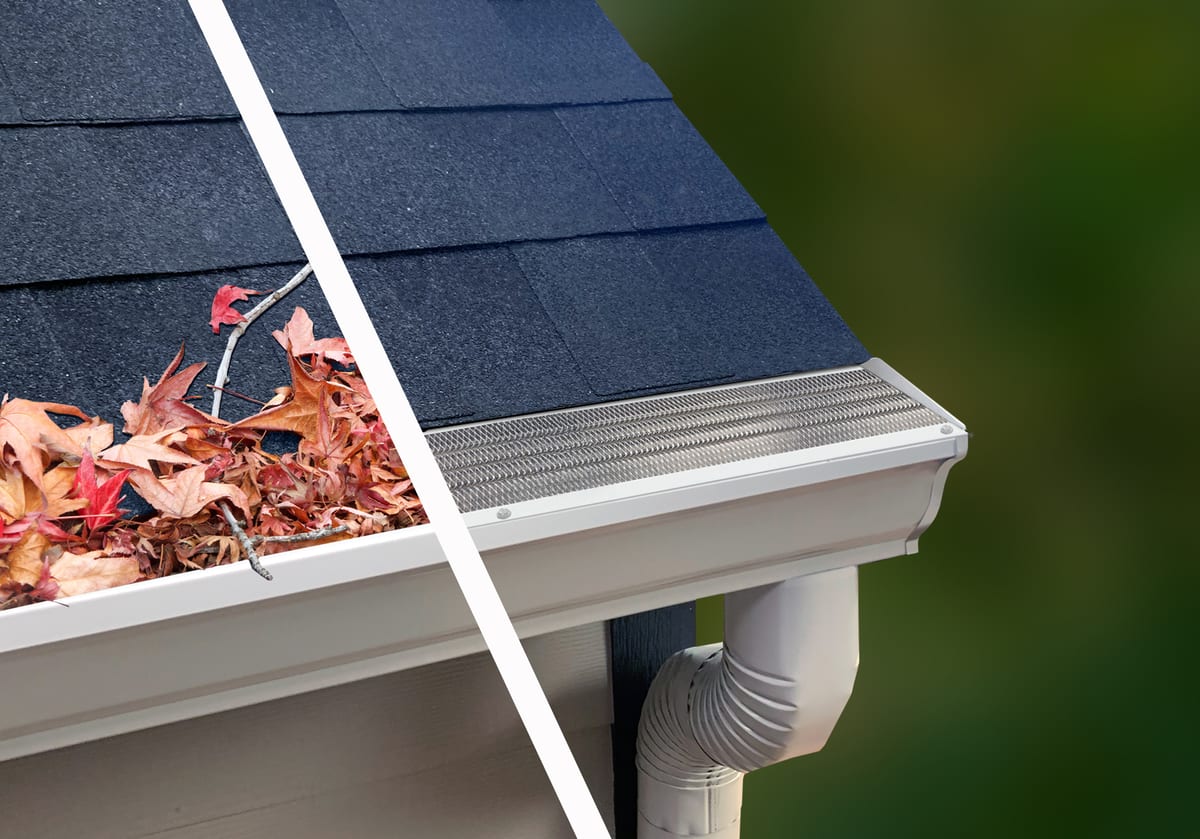
"All gutter guards are basically the same"
Verdict: false. Foam and brush inserts sit inside the gutter and trap seeds and needles in their own bodies. Plastic and perforated aluminum screens block oak and maple leaves but let pine needles and seed wings through. Hood or reverse curve covers depend on water wrapping around a rounded edge, which can shoot water past the gutter in a hard rain. Micro-mesh stops needles and most grit but is the type most likely to need a pollen rinse. Our comparison of the best gutter guards for pine needles and maple seeds matches each type to your trees.
"Gutter guards can't handle heavy rain"
Verdict: half true. Some can't. It comes down to four things:
- Guard type. Water can overshoot solid hood covers on a steep roof in a summer thunderstorm.
- Angle. Mesh set too steep acts like a ramp. Too flat holds wet leaves.
- Gutter size. A 5-inch gutter under a big, steep roof section can overflow in a downpour, guard or not.
- Downspouts. An Oregon State University Extension guide puts a 3 by 4 inch downspout at about 1,200 square feet of roof. A long run with one small downspout backs up no matter what sits on top.
On a dry day, run a hose at the high end of a run and watch the corners. It is not a real storm, but it shows where water heads. If gutters overflowed before guards went on, read why gutters overflow first.
"DIY gutter guards from the hardware store work just as well"
Verdict: half true. DIY guards can be fine on a single-story ranch with short runs you can reach safely and mostly big maple or oak leaves. A snap-in aluminum screen there can last a few years at low cost. They fall short under pines and heavy maple seed drops. Plastic warps in summer sun, light screens bend under wet snow, and guards that pop in easily tend to pop out. If you go DIY, buy a rigid metal guard sized to your gutter and fasten it to the gutter, not the shingles.
Are gutter guards a waste of money?
Gutter guards are a waste of money if no trees drop debris on your roof, your gutters need replacing, or you are moving soon. Under trees, stainless micro-mesh guards are a one-time cost priced per linear foot, while gutter cleaning in Northeast Ohio commonly runs about $100 to $250 for a single-story and $150 to $350 for a two-story, a market range, not a Guttrz price, and two visits a year for 10 years adds up to thousands of dollars.
"Gutter guards are too expensive to ever pay off"
Verdict: half true. Guttrz prices guards per linear foot, one rate for a single story and a higher rate for two-story or steep roofs, corners included, so a single-story home with 150 feet of gutter and 4 corners is quoted on the 150 feet alone. Divide that written price by what you spend on cleaning in a year and you have the payback in years. Two cleanings a year on a two-story under heavy trees pulls ahead years sooner than one light cleaning a year on a ranch does, even with a hired rinse every few years. Clean only once a year, or have no trees near the roof, and guards may never pay off on dollars alone. National brands are commonly quoted at $25 to $40 per foot, often $5,000 to $8,000 for a typical home, based on quotes homeowners report. Our page on how Guttrz compares with LeafFilter explains the gap. The full 10-year table is in are gutter guards worth it.
"You can see gutter guards from the street, and they look bad"
Verdict: mostly false. Low-profile micro-mesh sits nearly flat across the top of the gutter. From the yard, on most roof pitches, you see the gutter's front face, not the guard. Not every house, though. You may see mesh from a second-floor window above a porch roof, from a hillside above a ranch, or on a very low-slope roof. Hood covers and sagging plastic screens are easier to spot. If looks matter, ask to see a sample held against your own gutter.
Are gutter guards fire resistant, and can they withstand hail?
Metal gutter guards are fire resistant. Stainless steel is noncombustible, and aluminum does not catch fire; pure aluminum melts at about 1,220 degrees F. Plastic and foam guards can melt or burn. Hail is a real but occasional risk in Northeast Ohio: large hail can dent aluminum frames and gutters, while stainless mesh tends to hold up better.
"Gutter guards are a fire hazard" (or "gutter guards are fireproof")
Verdict: both are wrong. The guard is rarely the problem, and no guard makes a house fireproof. The real risk is dry fuel: a gutter packed with dry leaves and pine needles can be lit by a stray ember. Wildfire safety groups recommend noncombustible metal guards for that reason, and they warn that debris sitting on top of a guard can still burn. Ohio is not a high wildfire area, so the embers to think about here come from fire pits, chimneys, and Fourth of July fireworks. Keep the roof edge near a chimney or fire pit clear, guard or no guard.
"Hail will destroy gutter guards"
Verdict: half true. Northeast Ohio does get damaging hail now and then. On April 15, 2026, the National Weather Service office in Cleveland documented golf ball size hail, some 2 inches across, from the southern Cleveland suburbs east into Geauga and Trumbull counties, with damage to siding and windows. Hail that size can dent aluminum gutters and guard frames. Stainless mesh is relatively resilient and usually fares better than the aluminum around it, while plastic screens can crack. Hail damage to gutters is often covered by homeowners insurance, depending on your policy and deductible, so photograph dents after a big storm.
Do gutter guards work with rain barrels?
Yes. Gutter guards help rain barrels by keeping leaves, seeds, and twigs from washing down the downspout into the barrel. They do not stop fine dust or pollen, so you still want a screened lid and, ideally, a first flush diverter.
"Gutter guards and rain barrels don't mix"
Verdict: false. The worry is that guards starve the barrel. Clean mesh passes rain through and keeps out the leaf mush that clogs inlets and feeds mosquito larvae. The same Oregon State Extension guide calls a first flush diverter a must-have: it sends the first, dirtiest water away from the barrel, with the dust and droppings that pass through any guard. Keep a fine screen or lid on the barrel. In Northeast Ohio, empty and disconnect it before hard freezes and point the downspout away from your foundation for winter.
Before believing any claim, look in your gutters, note which trees reach your roof, and ask where the fasteners go. For real numbers on your house, see our gutter guard pricing, then use the form on this page or text (330) 818-5584. We text back a price range within an hour.
Common questions
What size gutter guards do I need?
Measure straight across the top of your gutter, from the back edge against the house to the outer front lip. About 5 inches means 5-inch gutters, and about 6 inches means 6-inch gutters, the two common K-style sizes. Half-round and box gutters need a guard made for that shape. For length, measure each run along the roof edge and count the inside and outside corners.
Do gutter guards attract pests?
Well-fitted guards do the opposite. Open gutters full of wet leaves hold standing water for mosquitoes and give birds and mice a place to nest. Trouble starts when guards are loose or gapped, because wasps and birds can get underneath into a sheltered space. Check corners and end caps, where gaps are most likely.
Do I need to clean gutters before installing gutter guards?
Yes. Anything left in the gutter gets trapped under the guard, where it holds water and can clog the downspout. A proper install starts with a full cleanout, a downspout flush, and a check of hangers, seams, and pitch, since a guard should never cover a sagging gutter. Guttrz includes the cleaning, downspout flush, and corner reseal free with any guard install.
What is the difference between a gutter guard and a gutter cover?
People use the words loosely. Gutter cover often means a solid hood or reverse curve piece that covers the whole gutter and relies on water curling around a rounded front edge. Gutter guard is the broader term and includes screens, micro-mesh, foam, and brush inserts. Ask any installer which type they actually mean.
Can you pressure wash gutter guards?
It is not a good idea up close. A pressure washer can bend fine mesh, force grit down into the gutter, and drive water up under shingles. A garden hose with a spray nozzle and a soft brush is enough for most mesh. Never lean a ladder directly on the guard while you work.
Will gutter guards fix a wet basement?
Only if clogged gutters are the cause. Guards keep gutters flowing so water reaches the downspouts, but that water still has to be carried away from the house. Check that each downspout empties several feet from the foundation and that the soil slopes away. Foundation cracks or a failed drain tile need a different fix.
How long does gutter guard installation take?
Installing micro-mesh guards on a typical home takes one day, usually about half a day, including the cleanout. Two-story homes, steep roofs, and many corners take longer. Guttrz sends before-and-after photos the same day.
Can gutter guards go on old gutters?
Yes, if the gutters are still sound. Guards only work as well as the gutter under them. If gutters sag, leak at the seams, pull away from the fascia, or have rotted boards behind them, fix that first or the guard will hide the problem. Many older aluminum gutters just need hangers tightened and seams resealed before guards go on.
Keep reading
Written by Christian Schaffner, owner of Guttrz. Updated October 8, 2026.
Where we install
Get your quote
Six quick steps. We send you a price range within the hour.